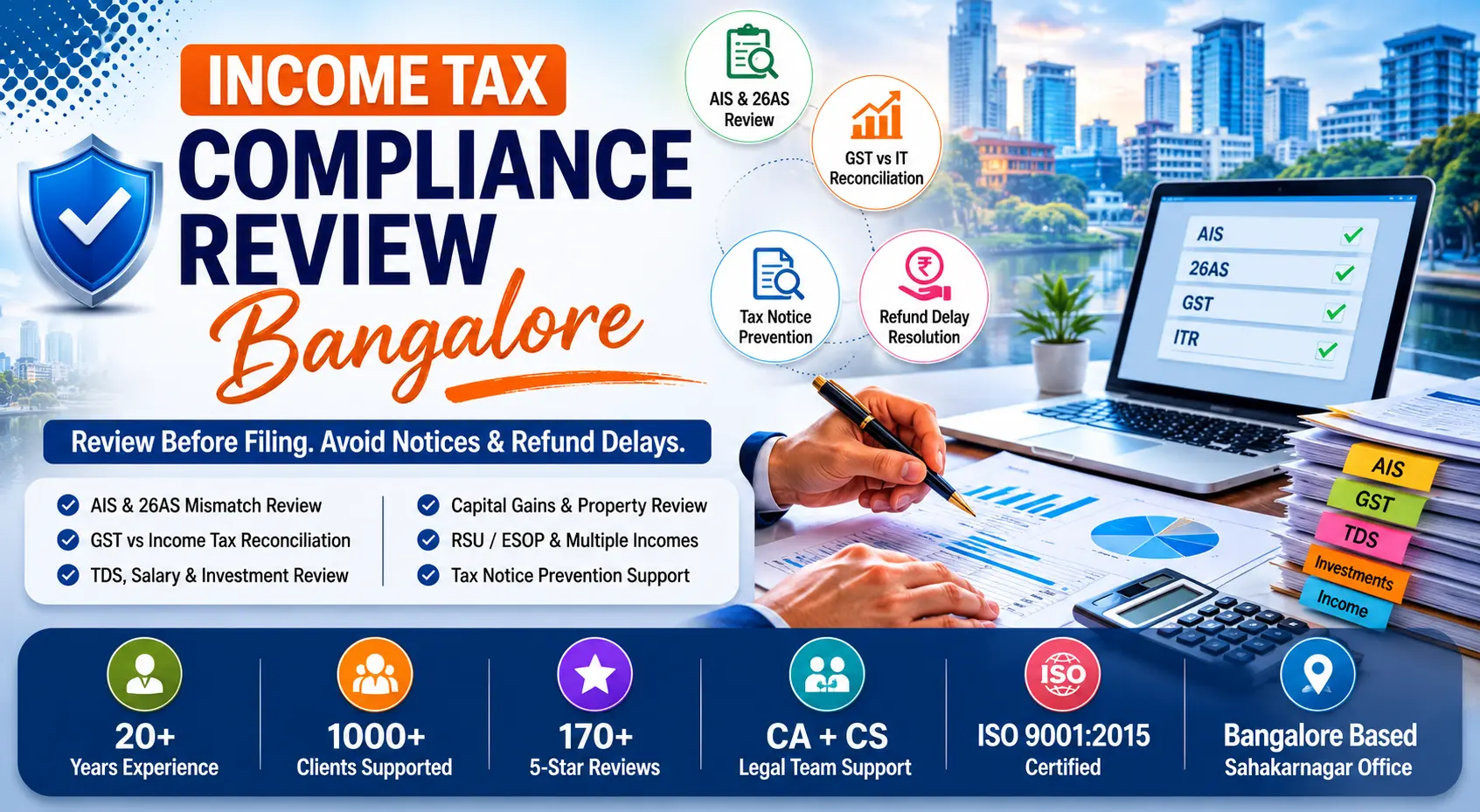
Waiting for an Income Tax Refund after filing the return is one of the most common concerns among salaried employees, IT professionals, consultants, business owners, and taxpayers across India. Many taxpayers become anxious when the refund amount is not credited immediately after filing the Income Tax Return (ITR).
In practical situations, income tax refunds are generally processed after successful ITR verification, processing by the Centralized Processing Centre (CPC), validation of bank account details, reconciliation of TDS credits, and automated review of deductions and disclosures made in the return. Refund timelines may vary depending on refund amount, assessment risk parameters, mismatch review, and the overall processing cycle of the Income Tax Department.
Many salaried employees commonly become eligible for refunds due to excess TDS deduction by employers, especially in cases involving HRA exemption, LTA claims, housing loan deductions, medical insurance deductions, gratuity exemptions, severance compensation, professional deductions, investment declarations, or situations where the employer processed salary under the default tax regime without considering all eligible exemptions available to the taxpayer.
At DSC Sign Bangalore, along with the professional support of Prakasha & Co. and Team IN Filings, returns are reviewed carefully under both old regime and new regime structures to identify the legally beneficial tax computation applicable to the taxpayer. Proper review of deductions and exemption eligibility may significantly improve refund eligibility while ensuring compliance with applicable income tax provisions.
Where the Income Tax Return is filed properly with accurate disclosures, verified bank details, valid TDS reconciliation, and legally supported deductions, taxpayers generally need not panic regarding refund delays. In many normal cases, refunds are processed in staggered timelines depending on the refund amount and system-based processing queue.
Practical Refund Processing Timeline (Indicative)
Refund up to ₹50,000
Often processed approximately within 15 to 45 days in normal verified cases.
Refund up to ₹1 Lakh
May commonly take around 1 to 2 months depending on CPC processing and review cycles.
Higher Refund Cases
Larger refunds or complex cases may undergo additional verification and can take comparatively longer.
Common Reasons Why Income Tax Refunds Get Delayed
In many situations, taxpayers become worried when the income tax refund is not credited immediately after filing the return. However, refund processing generally depends on successful ITR verification, CPC processing queues, TDS validation, bank account confirmation, AIS reconciliation, and automated compliance review systems of the Income Tax Department.
Most normal refund delays are procedural and do not necessarily indicate any major issue with the return. Proper filing, correct disclosure, accurate bank validation, and complete reconciliation usually help avoid unnecessary refund hold situations.
ITR Not Verified
Refund processing usually starts only after successful verification of the Income Tax Return through Aadhaar OTP, net banking, DSC, or other approved methods.
Bank Account Validation Pending
Refund may get delayed if the bank account is not pre-validated or linked properly with PAN on the income tax portal.
TDS Mismatch Issues
Mismatch between Form 16, Form 26AS, AIS/TIS, or employer TDS filings may lead to additional processing review.
High Refund Amount Cases
Larger refund claims may sometimes undergo additional automated verification before refund release.
Deduction & Exemption Review
Cases involving high HRA claims, old regime deductions, capital gains adjustment, or special exemptions may take comparatively longer for processing.
AIS/TIS or Compliance Mismatch
Undisclosed transactions reflected in AIS/TIS, investments, crypto activity, or banking mismatch may affect refund timelines.
Where the return is filed correctly with proper disclosures, valid deductions, correct bank validation, and accurate reconciliation, taxpayers generally need not panic regarding refund processing delays. Most refunds are processed systematically in batches based on automated CPC workflows and verification parameters.
How Proper Tax Review Helps Maximize Eligible Refunds
Many salaried employees and taxpayers unknowingly pay excess tax during the financial year due to incomplete investment declarations, default employer tax settings, incorrect tax regime selection, non-consideration of deductions, or improper salary structuring by payroll systems.
In practical situations, many companies process monthly TDS using the default tax regime without fully considering all exemptions or deductions available to the employee. As a result, taxpayers may become eligible for income tax refunds after proper review and filing of the final Income Tax Return.
Old vs New Regime Comparison
Detailed comparison of both tax regimes to identify the legally beneficial tax structure and improve possible refund outcomes.
HRA & Rent Exemption Review
Review of eligible HRA exemption calculations based on salary structure, metro/non-metro rules, and rent payment details.
LTA & Salary Benefit Review
Assessment of eligible leave travel allowance, gratuity exemptions, severance compensation, and salary-linked tax benefits.
Home Loan & Investment Deductions
Review of Section 80C, housing loan interest, medical insurance, education loan, and eligible investment deductions.
TDS & AIS Reconciliation
Verification of Form 16, Form 26AS, AIS/TIS, and bank disclosures to avoid mismatch and ensure correct refund computation.
Professional Filing Review
Careful filing support to reduce defective return risks, tax demand issues, or incorrect refund adjustments after processing.
DSC Sign Bangalore, together with Prakasha & Co. and Team IN Filings, assists taxpayers with structured tax review and legally supported deduction analysis to help optimize eligible refund claims while maintaining proper compliance with applicable income tax provisions.
How to Check Income Tax Refund Status Properly
After successful filing and verification of the Income Tax Return (ITR), taxpayers can track the refund processing status through the Income Tax Portal. In many situations, refund status updates move gradually through different processing stages before the amount is finally credited to the registered bank account.
Understanding the refund status correctly helps avoid unnecessary panic or confusion during the processing period. Many refund cases simply remain under CPC processing queues or verification stages before the refund release is initiated.
Return Filed
The Income Tax Return has been successfully uploaded on the portal but may still require verification before further processing.
ITR Verified Successfully
The return verification process is completed and the return is generally moved for CPC processing review.
Return Processing Underway
The CPC system is validating deductions, TDS credits, AIS/TIS entries, and refund computation details.
Refund Determined
The refund amount is generally finalized after processing and moved for bank credit procedures.
Refund Issued
Refund instructions are generated and transferred for banking channel processing and account credit.
Refund Failure or Hold
In some cases, refund may fail due to bank validation issues, PAN mismatch, account closure, or compliance review.
Where refund status remains pending for unusually longer periods, professional review of ITR processing status, bank validation, AIS/TIS reconciliation, TDS mismatch, or notice-related matters may help identify the practical reason for delay.
Frequently Asked Questions – Income Tax Refund Status
Common questions related to refund processing timelines, delayed refunds, verification issues, refund credit status, and practical refund expectations after Income Tax Return filing.
In many normal verified cases, refunds up to ₹50,000 may commonly be processed approximately within 15 to 45 days. Refunds involving larger amounts, deduction reviews, capital gains, business income, or additional verification may take comparatively longer depending on CPC processing cycles.
Common reasons include pending ITR verification, bank validation issues, TDS mismatch, AIS/TIS reconciliation review, high refund claims, or CPC processing queue delays.
Yes. In many situations involving HRA, home loan interest, LTA, medical insurance, gratuity exemptions, or investment deductions, the old regime may provide better refund outcomes compared to the default new regime structure.
Refund failure may occur due to invalid bank details, PAN mismatch, inactive accounts, or pre-validation issues. The bank account details generally need to be corrected and validated on the Income Tax Portal.
Yes. Higher refund claims or returns involving large deductions, foreign income, capital gains, or business disclosures may undergo additional automated review before refund release.
Yes. DSC Sign Bangalore, together with Prakasha & Co. and Team IN Filings, assists taxpayers with refund status review, TDS reconciliation, bank validation issues, AIS/TIS mismatch review, and correction-related support wherever required.
Need Help with Income Tax Refund Status or Delayed Refund?
DSC Sign Bangalore, together with Prakasha & Co. and Team IN Filings, assists salaried employees, IT professionals, consultants, business owners, and taxpayers with refund-oriented income tax filing review, old vs new regime comparison, TDS reconciliation, AIS/TIS mismatch support, delayed refund review, and correction-related tax filing assistance across Bangalore and India.
Refund Status Assistance
📞 6362877942
WhatsApp & Consultation Support
Email Support
📧 one@dscsign.com
Document & Refund Review Support
Professional Review Team
Karan M – Tax Filing Expert
Professional Support with Prakasha & Co.
Professional review may help identify practical issues relating to refund delay, TDS mismatch, AIS/TIS reconciliation, incorrect regime selection, deduction review, bank validation, or defective processing-related matters.